
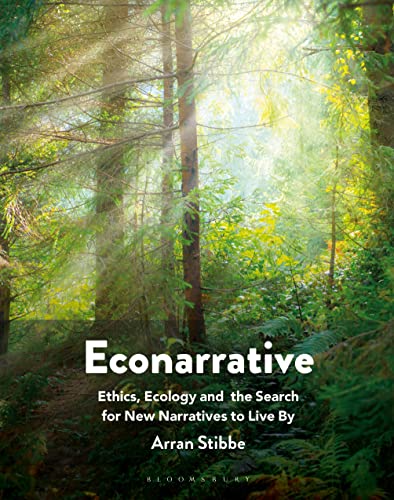
Econarrative : ethics, ecology, and the search for new narratives to live by / Arran Stibbe.
Material type: TextLanguage: English Publication details: London : Bloomsbury Academic, 2024.Description: 272 pages : illustrations ; 22 cmISBN:
 - 1350263117
- 9781350263116
- 1350263125
- 9781350263123
- 809.933 23/eng/20240117 STI
| Cover image | Item type | Current library | Home library | Collection | Shelving location | Call number | Materials specified | Vol info | URL | Copy number | Status | Notes | Date due | Barcode | Item holds | Item hold queue priority | Course reserves | |
|---|---|---|---|---|---|---|---|---|---|---|---|---|---|---|---|---|---|---|
 General Books
|
CUTN Central Library Literature | Non-fiction | 809.933 STI (Browse shelf(Opens below)) | Available | 54594 |
Includes bibliographical references and index.
1. Introduction -- 2. Beginning: Activation in Creation Narratives -- 3. Identifying: Ecocultural Identity in the Seed Sovereignty Movement -- 4. Emplacing: Timelessness and Placefulness in Haiku -- 5. Enchanting: Wonder in Nature Writing -- 6. Leading: Ethics in Leadership Communication -- 7. Feeling: Emotional Narrative in Climate Change Documentaries -- 8. Persuading: Multimodal Genres in Food Advertising -- 9. Ending: Metaphor and Finding Ourselves at the End of the Road -- 10. Conclusion
Econarratives are all around us, describing and shaping human interactions with other species and the physical environment. This book provides a foundational theory of econarrative, drawing from narratology, human ecology, critical discourse analysis, and ecolinguistics, and offering insights from a rich variety of texts including:· Creation myths· Indigenous podcasts· Ethical leadership speeches· Haiku poetry· Documentary films· New nature writing· Advertisements and campaigns· Apocalyptic stories. Adopting a global, transdisciplinary approach, it conducts in-depth analysis of specific works, including the Cherokee myth How the World Was Made, the speeches of Vandana Shiva, Nightwalk by Chris Yates, Naomi Klein's documentary This Changes Everything, the podcasts of Mohawk seed-keeper Rowen White, the Book of Revelation, and The Dark Mountain Manifesto. Raising awareness of the powerful role that language plays in structuring our lives and society, the book reveals narratological and linguistic features that convey activation, emotion, empathy, identity, placefulness, enchantment, compassion and other key factors that shape interactions with the natural world. If we want real, fundamental change, then we must search for new econarratives to live by.
There are no comments on this title.